
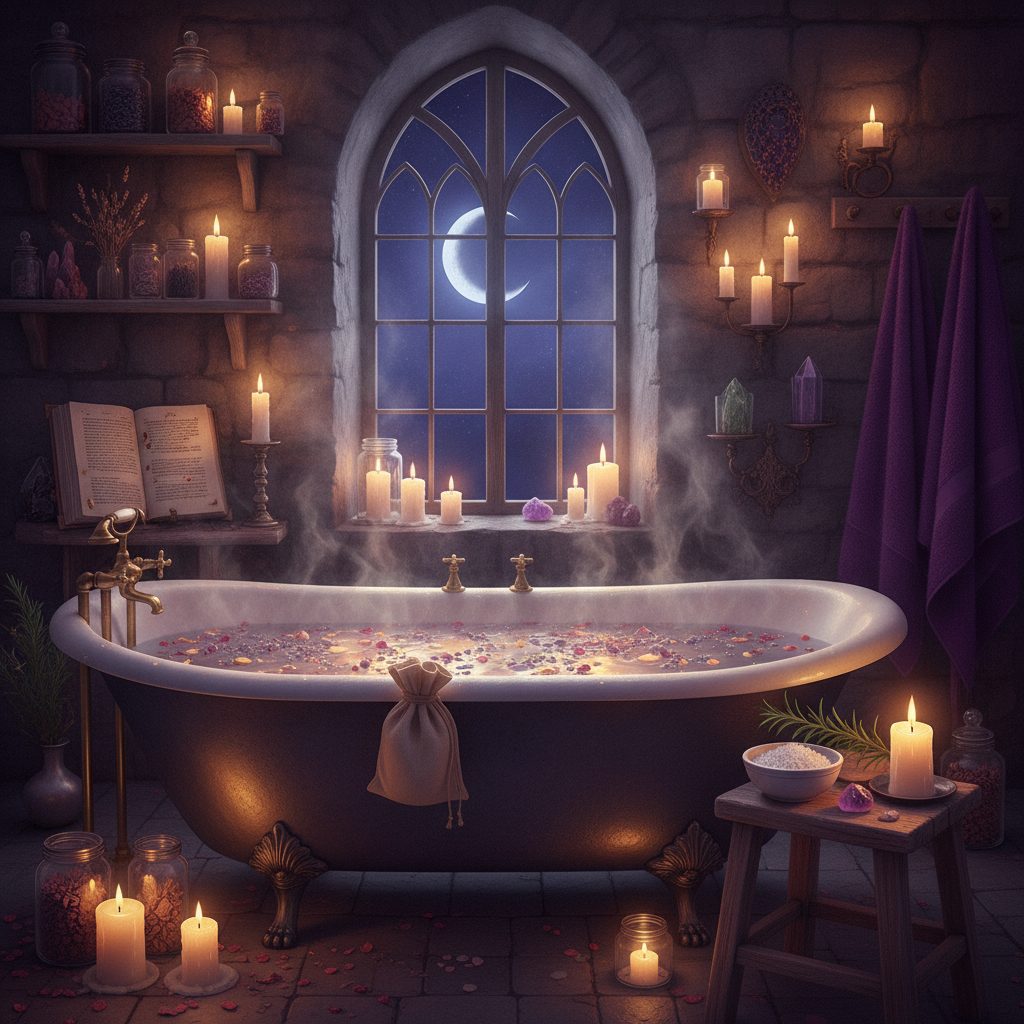
Ritual baths are one of the oldest and gentlest ways to mark a change, set an intention or simply step out of the everyday world for a while. Across many traditions, water is linked with cleansing, renewal and emotion, so it is no surprise that witches and Wiccans have long turned the humble bath into a sacred space. In this guide we explore the tradition behind ritual baths, how to build one mindfully, and, just as importantly, how to keep it safe.
What Is a Ritual Bath?
A ritual bath is a bath taken with focus and purpose. Instead of rushing, you prepare the space, choose a few meaningful items and move through the bath as a small ceremony. Many practitioners use it before a ritual, at a sabbat, at the turn of the moon, or when they want to mark a fresh start.
It is worth saying plainly: a ritual bath is a personal practice and a tradition, not a guaranteed fix for anything. Think of it as a way to quiet the mind, honor your intention and give yourself time to be present.
The Tradition Behind Ritual Bathing
Ceremonial washing appears in many cultures and spiritual paths around the world, often connected to purification before a rite or a major life moment. In modern Wicca and witchcraft, the idea is often described as washing away the busy energy of the day so you can enter sacred space feeling settled and open.
Many practitioners also connect bathing with the element of Water, which is linked with emotion, intuition and flow. If you are learning how the elements fit into your craft, our guide to the five elements of Wiccan practice is a lovely companion read.
Common Ingredients and Their Traditional Associations
There is no single correct recipe. These are simply popular choices, along with what they are traditionally associated with:
- Salt: long linked with cleansing and protection in folk practice.
- Lavender: associated with calm, rest and peaceful sleep.
- Rose petals: connected with love, self-care and gentleness.
- Rosemary: traditionally tied to remembrance, clarity and protection.
- Chamomile: associated with soothing, gentle energy.
- Milk or honey: sometimes used to symbolize abundance and sweetness.
Choose ingredients that speak to your intention, and keep it simple. Even a bath with warm water and a single candle can be a meaningful ritual.
How to Prepare a Simple Ritual Bath
1. Set your intention
Decide what the bath is for. It might be release, rest, gratitude or preparing for a ceremony. Say it quietly or write it down in your journal.
2. Prepare the space
Tidy the bathroom, dim the lights and play soft music if you like. Some witches lay out a few ritual tools or a small crystal on a safe, dry surface nearby.
3. Add your ingredients
Place herbs in a muslin bag or tea infuser so they do not clog the drain. Stir the water clockwise or counterclockwise to match your intention, as many traditions suggest drawing in or releasing.
4. Soak mindfully
Breathe slowly. Visualize the water carrying away what you no longer need, or filling you with the quality you want to invite in.
5. Close the ritual
As the water drains, picture any heaviness leaving with it. Dry off gently, thank the water, and take a quiet moment before returning to your day. Jot down what you noticed in your Book of Shadows.
Ritual Bath Safety Tips
A magical bath should always be a safe one. Please keep these points in mind:
- Check for allergies and sensitivities. Herbs, essential oils and salts can irritate skin. Test a small patch first and skip anything that causes discomfort.
- Be cautious with essential oils. They are very concentrated and do not mix with water on their own. Many people avoid adding them directly to a bath, so research carefully or choose dried herbs instead.
- Pregnancy and health conditions. Some herbs are not recommended during pregnancy or with certain conditions. Please check with a qualified healthcare professional first. Very hot water is also not suitable for everyone.
- Candle and fire safety. Keep flames well away from towels, curtains and water splashes. Never leave a burning candle unattended, and consider battery-operated candles for peace of mind.
- Pets and children. Keep herbs, salts and candles out of reach, as some plants and oils are harmful to animals.
- Protect the plumbing. Use a bag or strainer for plant material and dispose of it outdoors afterward.
- Get in and out carefully. Wet floors are slippery, and a bath mat helps. If you feel dizzy, get out slowly.
If a full bath is not possible, a foot soak or a ritual shower with a few mindful words is a perfectly valid alternative.
Keeping a Record of Your Practice
Many witches like to note which herbs they used, the moon phase and how the ritual felt. Over time, these notes become a personal guide to what works for you. If you would like a dedicated place for this, you might explore our handmade Books of Shadows.
Explore the Shop
If you are ready to gather supplies for your own ceremonies, you are welcome to browse our witchcraft supplies and find tools that suit your path. However you practice, we hope your next ritual bath is calm, careful and meaningful.
Frequently Asked Questions
How often can I take a ritual bath?
There is no set rule. Many practitioners take one at the new or full moon, at sabbats, or whenever they feel the need. Listen to your body, and keep in mind that frequent soaks with herbs or salts may dry or irritate some skin.
Do I need special ingredients for ritual baths?
No. Warm water, a clear intention and a calm mindset are enough. Herbs, salt and candles are optional additions that many people enjoy for their symbolism.
Are ritual baths safe during pregnancy?
Some herbs and very hot water may not be suitable during pregnancy, so please speak with a healthcare professional before trying one. A simple, warm and plain-water ritual with focused intention is often a gentler choice.
Follow Rare Wiccan Spells: Facebook • Instagram • Pinterest • YouTube • eBay Store