[mxchat_chatbot floating="yes" bot_id="contentbot1"]
Screenshot-2024-01-12-11.10
Witch Store
Blog
Psychic Bob
LogIn / LogOut
Shopping Cart

Candle Spells Book: The Big Book of Candle Magic by Jacki Smith

If you have ever lit a candle with a wish in mind and wondered whether you were doing it "right," a good candle spells book can be a steady guide. The Big Book of Candle Magic by Jacki Smith is a 320-page paperback that explains how candle spells are approached and offers examples for love, money, protection and wellbeing. Here is what it offers and who might enjoy it.

Open candle magic book on a candlelit altar with colored candles, a journal and dried rosemary

About The Big Book of Candle Magic

Jacki Smith is the founder of Coventry Creations, and this book draws on her decades of hands-on experience with candle work. Throughout the pages you will find tips from "Aunt Jacki," a friendly, approachable voice that makes the subject feel less intimidating.

The book sets out how candle spells work in the tradition it presents, then moves into practical examples you can read about and adapt to your own path. As with any magical practice, it is best viewed as a source of tradition and inspiration for your personal practice, not a promise of outcomes.

Key details at a glance

  • Author: Jacki Smith
  • Format: paperback (a physical book, not a digital download)
  • Pages: 320
  • Size: 7" x 8.9"

Who This Candle Book Is For

The book is described as a good fit for beginner and intermediate candle magic. That makes it a welcoming place to start if you are new to wicca for beginners style learning, and a useful reference if you already light candles regularly but want fresh ideas or a clearer structure.

  • Newcomers who want plain-language explanations of how candle spells are put together.
  • Intermediate practitioners looking for more examples to broaden their repertoire.
  • Journal keepers who like to test ideas and note what they learn.

Topics Covered: Love, Money, Protection and Wellbeing

Candle magic is one of the most approachable forms of spellwork because the tools are simple and the symbolism is easy to grasp: a flame, a color, a clear intention. The Big Book of Candle Magic gathers examples across themes many practitioners return to again and again:

  • Love and relationships
  • Money and prosperity
  • Protection
  • General wellbeing

Having these in one volume means you can focus on what matters to you right now rather than hunting across many sources.

How to Use Your Candle Spells Book

There is no single correct way to read it. The book suits two styles:

  • Read it straight through to build a foundation and understand the thinking behind candle work.
  • Dip in by topic when you need something specific, such as a protection ritual before a big change.

Many readers also like to mark the practices they want to try and record their experiences in a journal or book of shadows. Noting the date, moon phase, candle color and how the working felt turns a one-off ritual into a growing body of personal knowledge. If you are just beginning that habit, you may enjoy pairing this book with a blank journal and our guide on starting a Book of Shadows.

Because it is sturdy reference material, it also earns a place on your altar-side shelf, ready to consult whenever inspiration or uncertainty strikes. You can find it here: Jacki Smith's candle magic paperback.

What to Know Before You Choose

Before adding any spell book to your collection, ask yourself a few questions:

  • Do I want a physical book to annotate and keep, or a digital file? This one is a paperback.
  • Am I comfortable with a guide that suits beginner to intermediate levels?
  • Will I use it as a reference, a workbook, or both?

It also helps to remember that every tradition has its own flavor. Read with an open mind, keep what resonates and adapt what does not. Your intention and your practice are what make a working yours.

A note on candle safety

Whenever you work with candles, never leave a flame unattended, keep them away from curtains, paper and other flammable items, and place them on a heat-safe surface out of reach of children and pets. If you add oils, herbs or incense to a working, check for allergies and sensitivities, and speak with a healthcare professional first if you are pregnant or have health concerns.

Final Thoughts

For anyone drawn to the quiet glow of a flame and the ritual of setting an intention, this is a generous, approachable volume to learn from. If a dependable candle spells book sounds like the right companion for your practice, take a closer look at The Big Book of Candle Magic in our shop.

Frequently Asked Questions

Is this book suitable for beginners?

Yes. It is described as a good fit for beginner and intermediate candle magic, so newcomers and more experienced practitioners can both find something useful.

Is it a digital download?

No. It is a 320-page paperback measuring 7" x 8.9".

What topics does it cover?

It explains how candle spells work and gives examples for love, money, protection and wellbeing, with tips from "Aunt Jacki."

See The Big Book of Candle Magic by Jacki Smith – Candle Spells Book, 320 Pages in the shop →


Follow Rare Wiccan Spells: Facebook • Instagram • Pinterest • YouTube • eBay Store
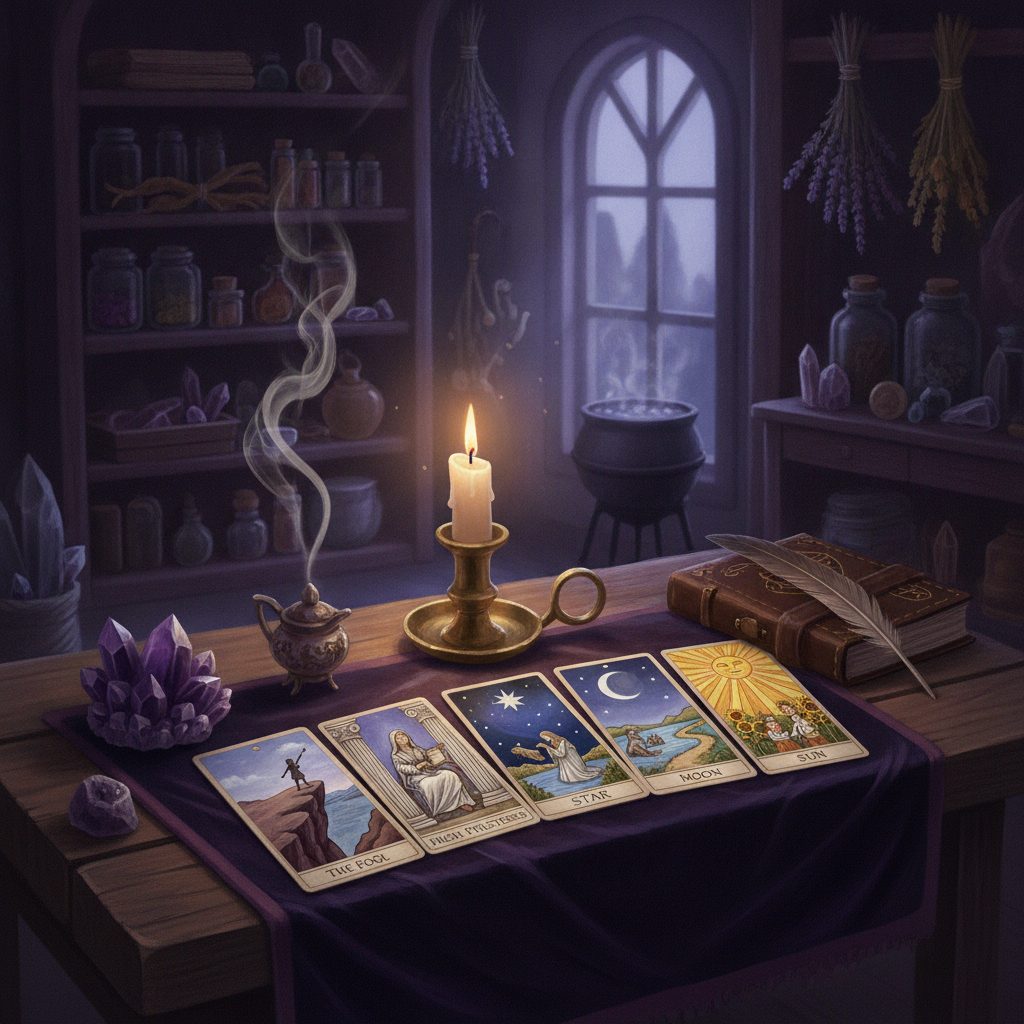
Major Arcana Meanings: A Beginner’s Guide to the 22 Cards

If you have ever pulled a card like The Tower or The Star and wondered why it felt so weighty, you have met the major arcana. Understanding major arcana meanings is one of the best first steps in tarot, because these 22 cards carry the big themes of the deck: growth, change, love, loss, and spiritual awakening. This guide walks you through what they are, how they fit together, and how to begin reading them in your own practice.

What Is the Major Arcana?

A standard tarot deck has 78 cards, split into two parts. The minor arcana has 56 cards in four suits and tends to describe everyday events and moods. The major arcana has 22 cards numbered 0 to 21, and each one is a named archetype, such as The Magician, The Hermit, or The World.

Many readers treat these cards as turning points. When several appear in a spread, it is often read as a sign that the question touches something significant or long-lasting. That is a tradition of interpretation, not a rule, and your own intuition matters just as much.

The Fool's Journey: One Story in 22 Steps

A popular way to learn the cards is the Fool's Journey. The Fool (card 0) is a traveler setting out with curiosity and little experience. Each following card is a person, lesson, or challenge met along the way, until the journey closes with The World, a sense of completion and wholeness.

Reading the cards as a story makes them far easier to remember than memorizing 22 separate lists. Ask yourself where in the journey you feel you are right now.

Major Arcana Meanings: The 22 Cards at a Glance

Meanings vary between decks and readers, so treat these as traditional starting points rather than final answers.

Cards 0 to VII: Beginnings and Building a Self

  • The Fool (0): new beginnings, trust, a leap of faith.
  • The Magician (I): willpower, skill, using the tools you have.
  • The High Priestess (II): intuition, mystery, inner knowing.
  • The Empress (III): nurturing, abundance, creativity.
  • The Emperor (IV): structure, authority, stability.
  • The Hierophant (V): tradition, teaching, shared beliefs.
  • The Lovers (VI): relationships, values, important choices.
  • The Chariot (VII): determination, direction, self-control.

Cards VIII to XIV: Testing and Reflection

  • Strength (VIII): courage, patience, gentle resilience.
  • The Hermit (IX): solitude, reflection, seeking wisdom.
  • Wheel of Fortune (X): cycles, change, timing.
  • Justice (XI): fairness, truth, cause and effect.
  • The Hanged Man (XII): pause, surrender, a new perspective.
  • Death (XIII): endings and transformation, rarely a literal death.
  • Temperance (XIV): balance, moderation, blending opposites.

A note on numbering: in some older decks, Strength and Justice swap places, so do not worry if your deck differs.

Cards XV to XXI: Upheaval and Fulfilment

  • The Devil (XV): attachments, temptation, feeling stuck.
  • The Tower (XVI): sudden change, revelation, shaken foundations.
  • The Star (XVII): hope, renewal, quiet inspiration.
  • The Moon (XVIII): dreams, illusion, the subconscious.
  • The Sun (XIX): joy, clarity, vitality.
  • Judgement (XX): reflection, awakening, answering a calling.
  • The World (XXI): completion, integration, a cycle closing.

How to Start Reading the Major Arcana

You do not need to memorize everything at once. These gentle habits help the cards become familiar:

  • Look before you read. Study the imagery first. What colors, figures, and symbols stand out to you?
  • Work with one card at a time. Spend a few days with a single card and notice where its themes appear in your life.
  • Read the whole spread. A card's meaning shifts with its neighbors and with your question.
  • Look for the lesson, not a verdict. Difficult cards like The Tower or The Devil are often invitations to notice something, not predictions of doom.
  • Trust your intuition. Guidebooks are a map, but your impressions are part of the reading.

Tarot is best approached as a tool for reflection and personal insight. It does not guarantee outcomes, and it should never replace professional medical, legal, or financial advice.

Keep a Record of What You Learn

Many practitioners write down each card they pull, their first impressions, and what happened afterward. Over time this becomes a personal reference far richer than any list. A handmade Book of Shadows can be a lovely home for your tarot notes, sketches, and spreads, and a good reference from our collection of Wiccan and witchcraft books can deepen your study.

If you like to set a mood for readings, you might light a candle or burn incense. Always keep flames on a stable, heat-safe surface and never leave them unattended. Check that any herbs or smoke are suitable if you have allergies, are pregnant, or share your home with pets.

If you would like a fresh perspective while you learn, you can also explore online tarot readings and see how an experienced reader works with the cards. We invite you to browse the shop whenever you are ready to build your tarot practice, one card at a time.

Frequently Asked Questions

How many cards are in the major arcana?

There are 22 cards, numbered 0 (The Fool) through 21 (The World). Together they form the spiritual backbone of the tarot deck.

Should beginners learn the major arcana first?

Many teachers suggest it, because the major arcana gives you the deck's main themes and symbols. Once these feel familiar, the minor arcana is easier to understand.

Does the Death card mean someone will die?

Traditionally, no. Death usually symbolizes an ending, a transition, or a transformation, and most readers see it as a sign of change rather than a literal event.


Follow Rare Wiccan Spells: Facebook • Instagram • Pinterest • YouTube • eBay Store

Scroll to Top