[mxchat_chatbot floating="yes" bot_id="contentbot1"]
Screenshot-2024-01-12-11.10
Witch Store
Blog
Psychic Bob
LogIn / LogOut
Shopping Cart

Magical Herbs Encyclopedia: Cunningham’s 400+ Herb Reference

If you have ever stood in your kitchen holding a jar of basil or rosemary and wondered what witches have traditionally said about it, a magical herbs encyclopedia is the shelf companion you need. Cunningham's Encyclopedia of Magical Herbs by Scott Cunningham gathers the folklore and magical associations of more than 400 herbs into one easy-to-browse reference, and many of those herbs may already be sitting in your spice rack.

Open herb encyclopedia on a candlelit witch's table with dried herbs, jars and a mortar and pestle

What Is Cunningham's Encyclopedia of Magical Herbs?

This is a reference book written by Scott Cunningham, an author many Wiccans and solitary practitioners know well. It lists over 400 herbs and describes their magical properties and the folklore that surrounds them. Rather than a book of step-by-step rituals, it works like a dictionary of plant lore: you look up an herb and see how tradition has used and described it.

The 400+ herbs reference is a physical book, not a digital download, so it can sit on your altar shelf, your kitchen counter or beside your journal.

Who This Book Is For

A herb reference like this suits many paths. You might find it especially helpful if you are:

  • New to the craft and building a foundation in plant lore alongside other Wicca for beginners reading.
  • A kitchen witch or green witch who likes working with everyday ingredients and garden plants.
  • An experienced practitioner who wants a quick place to check herb correspondences when planning a working.
  • A journal keeper who likes to cross-reference what they read with their own experience.

Understanding Herb Correspondences

In witchcraft, a correspondence is a traditional link between an item and a purpose, element, or theme. Practitioners often use these links when choosing what to place on an altar, add to a sachet, or write into a spell. Because traditions differ, correspondences are best seen as a starting point for your own thinking, not a fixed rulebook.

An encyclopedia format makes this easy. Instead of searching many websites that may disagree with each other, you have one consistent source to compare against. Over time you may notice which associations resonate with you and which you would adjust for your own practice.

Kitchen and Green Witchcraft

One of the pleasures of this kind of book is how it connects the everyday to the magical. Common herbs and household plants have long been part of folk tradition, and looking them up can change how you see your pantry. Stirring a pot or watering a windowsill plant can become a mindful moment of intention.

How to Use Your Herb Encyclopedia

There is no wrong way to read a reference book. Here are some approaches that practitioners commonly enjoy:

  • Read it straight through to absorb the breadth of plant lore, a little at a time.
  • Dip in by topic when you have a specific herb or intention in mind.
  • Mark the practices you want to try with sticky notes or a pencil.
  • Record your results in a journal or Book of Shadows so you build your own personal record.
  • Keep it on your shelf as a go-to resource whenever questions arise.

Pairing the book with a notebook is a lovely habit. If you are starting one, our post on choosing a reference like this Cunningham herb guide is a good moment to also think about how you will log your notes, whether in a Book of Shadows or a simple spellwork journal.

What to Know Before You Choose a Herb Reference

  • Scope: Look for a book with enough entries to cover the herbs you actually own or grow. This one covers more than 400.
  • Layout: A reference should be easy to search so you can find an herb quickly mid-practice.
  • Your path: Remember that sources vary. Use the book as one voice among several as your own practice develops.

A Note on Safety

Magical lore is not the same as medical or culinary guidance. Before handling, burning, bathing with, or ingesting any herb, check that it is safe for you. Some plants can trigger allergies or skin reactions, some are unsafe during pregnancy, and some are harmful to pets or children. Never ingest an herb for a magical purpose unless you are certain it is food-safe, and speak to a qualified professional if you have health concerns. If you burn herbs or candles, keep them on a heatproof surface and never leave a flame unattended.

Bringing Plant Lore Into Your Practice

Whether you are growing a windowsill garden, stocking an apothecary shelf, or simply curious about the herbs in your cupboard, a trusted reference makes the journey richer. You can find Scott Cunningham's herb encyclopedia in our Books & Journals collection, ready to become a well-thumbed part of your library. A good magical herbs encyclopedia grows more valuable the more you use it.

Frequently Asked Questions

How many herbs are in Cunningham's Encyclopedia of Magical Herbs?

The book covers more than 400 herbs, including many common kitchen herbs, along with their magical properties and folklore.

Is this book good for beginners?

Yes. Because it works as a look-up reference, beginners can start with herbs they already know and learn gradually. It pairs well with a journal for recording what you try.

Is this a digital download?

No. This is a physical book, so you can keep it on your shelf and mark the pages you want to revisit.

See Cunningham's Encyclopedia of Magical Herbs – 400+ Herbs Reference in the shop →


Follow Rare Wiccan Spells: Facebook • Instagram • Pinterest • YouTube • eBay Store
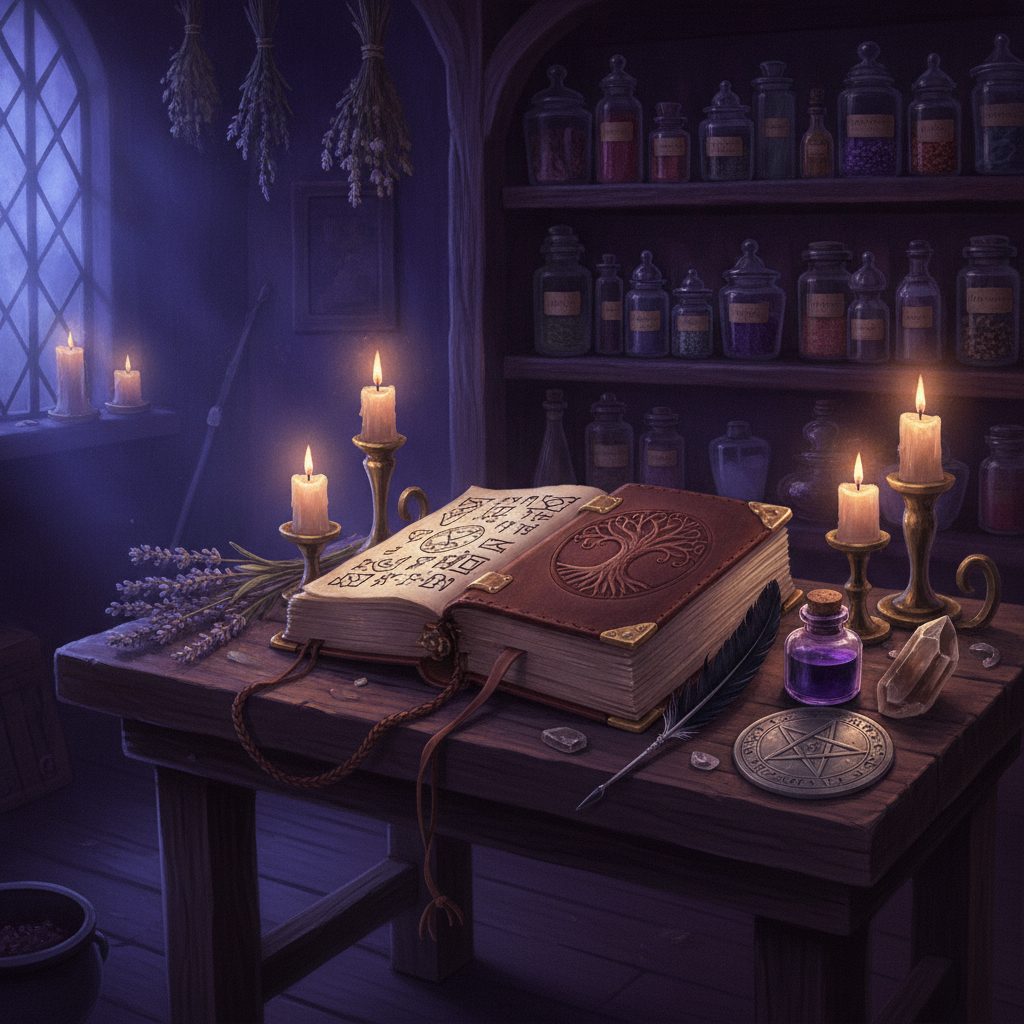
Handmade Grimoire: What to Look For Before You Buy

A handmade grimoire is more than a notebook with a nice cover. For many witches it becomes a lifelong companion, holding spells, moon notes, dreams, correspondences and the story of their path. Because you may carry it through years of practice, it is worth choosing with care. Here is what our team suggests looking for, whether you are a beginner or have filled many books already.

Grimoire or Book of Shadows: Does the Name Matter?

You will see both terms used, and traditions differ. In many modern Wiccan circles, a book of shadows is a personal record of rituals, spells and lessons. Grimoire is an older word for a book of magical instruction, and many solitary witches use it for their own working book. Plenty of practitioners use the words interchangeably. Choose whichever name feels right to you; the book itself works the same way.

Start With How You Plan to Use It

Before you look at covers, ask yourself a few honest questions:

  • Will it be a fair copy book for polished spells, or a working journal for messy notes?
  • Will it stay on your altar, or travel with you?
  • Do you like to sketch sigils, paste in pressed leaves or tape in printed pages?
  • Do you want one book for everything, or separate books for spells, dreams and tarot?

Your answers shape every other choice. A book that lives on a shelf can be large and heavy. A book for carrying needs to be slimmer and sturdier.

Paper: The Heart of a Good Grimoire

Paper is where most handmade books succeed or disappoint. Consider:

  • Weight and thickness: Thicker pages handle ink, light washes and glue better, and they resist show-through.
  • Texture: Smooth paper suits fine pens. Toothier, parchment-style paper has a lovely old-world feel but can snag delicate nibs.
  • Lined, blank or mixed: Blank pages are best for sigils, diagrams and moon charts. Lined pages help with long written spells.
  • Page count: Think ahead. A book you fill in a season may leave you hunting for a matching volume.

If you can, test your favorite pen on a scrap of similar paper before committing.

Binding and Construction

A grimoire gets opened flat, thumbed through and sometimes dripped on. Good construction matters. Look for stitched or sewn signatures rather than loose glue alone, a spine that lets pages lie open without cracking, and corners that feel solid. Ask the maker how the book is bound if the listing does not say. A well-made book should open comfortably without you fighting it.

Covers and Materials

Leather and leather-look covers are popular for their weight and ritual feel. Cloth and embossed covers can be lovely too. Notice the symbols: a tree of life, moon phases, a pentacle or animals may each speak to you differently. Choose imagery that fits your path rather than what is trending, since you will see it every time you practice.

Closures and Extras

Cords, clasps and straps keep pages protected and add a sense of ceremony when you open the book. Some books include ribbon markers, pockets for loose notes or decorative stones. These are pleasant features, but they matter less than paper and binding.

Size and Weight

Smaller books, around journal size, are easy to carry and quick to fill. Larger books give you room for full-page sigils and ritual layouts, but they can feel intimidating to a new practitioner. If you are unsure, a mid-sized book is often the most flexible choice.

Making It Feel Like Yours

A handmade grimoire is meant to be personalized. Many witches bless or consecrate their book before the first entry, perhaps with a quiet moment at the altar, a candle and a simple statement of intention. Others write a dedication on the first page. If you enjoy printed pages, you can add printable spell pages to a binder-style book or glue them into a bound one.

Safety note: If you work with candles, incense or herbs near your book, keep flames well away from paper, never leave a burning candle unattended, and use a heat-safe dish. Be mindful of allergies, pets and pregnancy when handling herbs or oils, and check with a qualified professional if you are unsure.

Questions to Ask Before You Buy

  • How is the book bound, and will it lie open?
  • What kind of paper is inside, and is it suitable for ink?
  • Does the size match how I plan to use it?
  • Does the cover imagery feel meaningful to me?
  • Will I feel comfortable writing in it, imperfections and all?

Explore Our Handmade Books

If you are ready to find your own, we would love for you to browse our handmade Books of Shadows and see which one calls to you. You can also pair it with witchcraft supplies for your altar and writing space.

Frequently Asked Questions

Is a grimoire different from a book of shadows?

Traditions vary. Some people see a book of shadows as a personal magical journal and a grimoire as a book of magical instruction, while others use the words interchangeably. Use the term that suits your practice.

Should a beginner buy a handmade grimoire?

It is a personal choice. Some beginners enjoy starting with a special book because it makes practice feel meaningful. Others begin with a simple notebook and upgrade later. Neither approach is wrong.

How do I prepare a new grimoire for use?

Many practitioners dedicate it with a short ritual or a written intention on the first page. Keep it simple and do whatever feels respectful and sincere to you.


Follow Rare Wiccan Spells: Facebook • Instagram • Pinterest • YouTube • eBay Store

Scroll to Top