
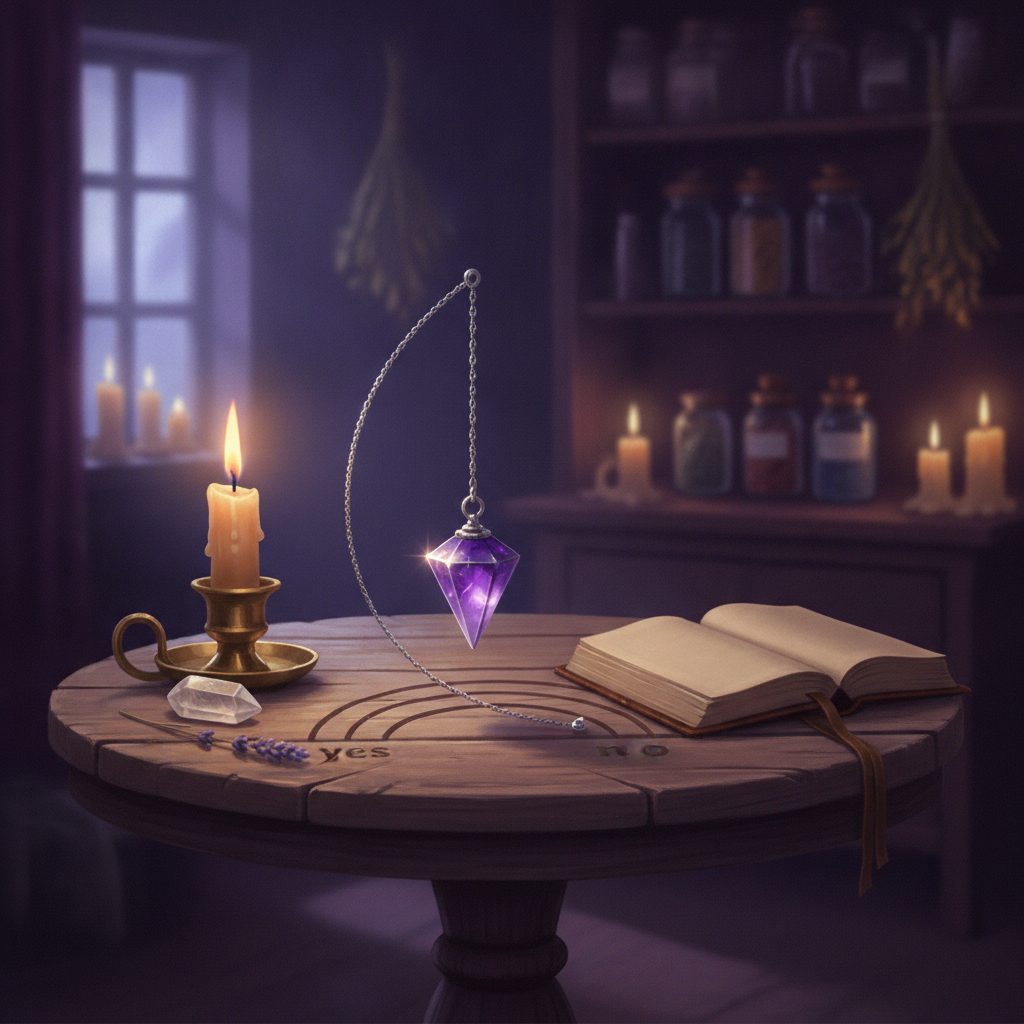
Pendulum divination is one of the simplest and most approachable forms of divination. All you need is a weighted object on a chain or cord, a calm mind and a clear question. Practitioners have used swinging pendulums for generations to seek guidance, and many people find them a lovely entry point into intuitive work. In this guide, we will walk you through the basics so you can begin with confidence and care.
What Is a Pendulum and How Is It Used?
A pendulum is a small weight, often a crystal, stone, wood or metal point, hung from a chain, cord or thread. In divination, the practitioner holds the chain still and asks a question. The subtle movement of the weight is then read as an answer, usually yes, no or maybe.
Skeptics point to tiny, unconscious muscle movements as the cause of the swing. Many practitioners see this as part of the point: the pendulum can act as a mirror for your intuition, helping you notice what you already feel beneath the noise of daily thoughts. Whichever view you hold, it is best treated as a tool for reflection, not a guarantee of what will happen.
Choosing Your First Pendulum
There is no single right pendulum. Choose one that feels good in your hand and appeals to you. Some common options include:
- Clear quartz: traditionally associated with clarity and amplification.
- Amethyst: often linked with intuition and calm.
- Rose quartz: associated with gentleness and matters of the heart.
- Wood or metal: simple, durable and free of any crystal symbolism if you prefer that.
Look for a pendulum with a comfortable weight and a chain that moves freely. You can even begin with a ring or a pendant on a thread from your own collection. If you enjoy working with stones, our article on crystals in magickal practice offers more on their traditional meanings.
Cleansing and Connecting With Your Pendulum
Many practitioners cleanse a new pendulum before first use, much as they would other ritual tools. Common methods include passing it through incense smoke, resting it in moonlight, or holding it and setting a clear intention. Spend a few quiet minutes simply holding it so it becomes familiar in your hand.
Safety note: If you use smoke, keep the room ventilated and never leave burning items unattended. Some people are sensitive to incense or herbs, and smoke may not suit anyone with breathing concerns, pets nearby or pregnancy, so choose moonlight or intention instead if in doubt. Some crystals should not be left in water or strong sun, so check your stone first.
How to Set Your Yes and No Signals
Before asking real questions, establish how your pendulum communicates. This is a key step in pendulum divination for beginners.
- Sit comfortably with your elbow resting on a table, holding the chain between thumb and forefinger so the weight hangs freely.
- Take a few slow breaths and let the pendulum settle.
- Ask, "Show me yes." Watch the movement. It may swing back and forth, side to side, or in a circle.
- Pause, let it settle, then ask, "Show me no."
- Repeat with "maybe" or "I prefer not to answer" if you wish.
Everyone's pendulum moves a little differently, so trust the pattern you observe. Test it with simple, known questions such as "Is my name...?" to see the movements clearly.
Asking Better Questions
The way you phrase a question shapes the answer. Pendulums work best with clear, closed questions that can be answered yes or no.
- Be specific: "Would a walk outside help me feel refreshed today?" works better than "What should I do?"
- Avoid multiple questions in one: keep it to a single idea.
- Focus on your own path: avoid prying into other people's private lives.
- Stay grounded: do not use a pendulum to replace medical, legal or financial advice from a qualified professional.
Setting the Scene for Your Practice
A little ritual can help you focus. Clear a small space on your altar or table, light a candle if you like, and take a moment to ground yourself. Some people write each question and its result in a journal so they can look back and notice patterns over time. A Book of Shadows or spellwork journal is a lovely home for these notes.
Safety note: If you light a candle, keep it away from flammable items, never leave it burning unattended and keep it out of reach of children and pets.
Common Beginner Mistakes
- Rushing: if you are anxious or distracted, take a break and try another time.
- Asking the same question repeatedly: this can lead to confusion rather than clarity.
- Treating answers as fate: a pendulum is a prompt for reflection, and you always have free will.
- Leading the answer: if you have a strong preference, you may unconsciously steer the swing. Notice this honestly.
Pendulums and Other Divination Tools
Many practitioners combine pendulum work with tarot, runes or scrying. A pendulum can help you choose between spreads, confirm an interpretation or simply offer a quick check-in. If you are curious about cards, our guide to pulling a single tarot card for daily guidance pairs nicely with it.
Explore More at the Shop
If this guide has sparked your interest, we would love to help you continue. You can browse our witchcraft supplies for ritual tools, find a home for your notes in one of our handmade Books of Shadows, or explore online tarot readings for another view on your questions.
Frequently Asked Questions
Do I need a crystal pendulum for pendulum divination?
No. Any small weight on a cord or chain can work. Choose whatever feels right to you, whether that is a crystal, wood, metal or a simple pendant.
How often should I use a pendulum?
There is no set rule. Many people use theirs occasionally, when they want a moment of reflection, and rest it when they feel tired or emotional.
Why is my pendulum not moving?
Try relaxing your hand, breathing slowly and holding the chain more loosely. Practice with simple questions, and be patient. It often takes a few sessions to feel comfortable.
Follow Rare Wiccan Spells: Facebook • Instagram • Pinterest • YouTube • eBay Store