[mxchat_chatbot floating="yes" bot_id="contentbot1"]
Screenshot-2024-01-12-11.10
Witch Store
Blog
Psychic Bob
LogIn / LogOut
Shopping Cart

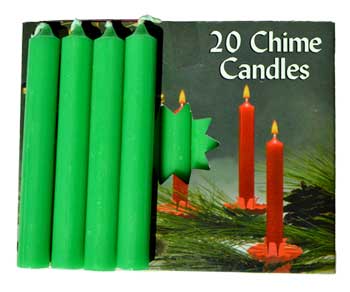
Emerald Green Chime Candles: 20-Pack for Money and Luck

If you like to keep small, simple candles on hand for quick workings, emerald green chime candles are a lovely place to start. This pack gives you 20 slim candles in a deep green traditionally tied to prosperity, growth and good fortune. Below we look at what the pack offers, what the color means in candle magic, and how practitioners tend to use chime candles.

Lit emerald green chime candles on a candlelit altar with dried herbs, oil and a carving tool

What Is in the Emerald Green Chime Candle 20-Pack?

Here are the details at a glance:

  • Quantity: 20 candles
  • Size: 4 inches tall by 1/2 inch wide
  • Color: emerald green
  • Typical burn time: about 1 to 2 hours

Because they are slim and short, these candles are made for focused, single-sitting work. You light one, set your intention, and let it burn down in one session. The 20-candle pack of emerald green chimes also means you can repeat a ritual over several days or keep spares for whenever inspiration strikes.

Emerald Green in Candle Magic

In candle magic, color is one of the most common ways to point a working toward its purpose. Emerald green is traditionally associated with:

  • Money and abundance
  • Growth, whether personal, creative or financial
  • Luck and fortunate openings

Many practitioners link green with the living earth, new shoots and steady flourishing. That is why it appears so often in prosperity work. These are traditional correspondences and personal practice, not guarantees, so think of the candle as a focus for your intention rather than a promise of outcomes.

How to Use Chime Candles in Your Practice

Chime candles are a classic of spellcraft because they are quick, tidy and easy to dress. A traditional approach looks like this:

1. Choose your intention

Decide what the candle is for. A clear, specific intention, such as steady growth in a new project or openness to good luck, tends to give a ritual more focus than a vague wish.

2. Carve and dress it

If you like, carve a name, a word or a sigil into the wax. Many people then dress the candle with a little oil or roll it in herbs that match their purpose, before setting it in a chime candle holder.

3. Light and let it burn

Light the candle, spend a few minutes in meditation or speak your intention aloud, then let it burn all the way down. With this size, that usually takes around one to two hours.

Ready to try it? The emerald green chime candle set gives you plenty of candles to practice with.

Good Uses for a Pack of Green Chime Candles

  • Money and prosperity spells
  • Growth rituals for projects, studies or new ventures
  • Luck workings before an important opportunity
  • Short meditation sessions on abundance
  • Stocking up on everyday spell candles so you are never without one

What to Know Before You Choose Chime Candles

  • You need a holder. Chime candles are slim, so use a proper chime candle holder that fits the 1/2 inch width.
  • Think about quantity. If you work often or repeat spells over several nights, a multi-pack is practical.
  • Match color to purpose. Emerald green suits prosperity, growth and luck. Other intentions may call for other colors.

Safety Notes

Never leave a burning candle unattended. Keep it on a heat-safe surface, away from curtains, paper and anything flammable, and keep it out of reach of children and pets. If you dress candles with oils or herbs, check for allergies and skin sensitivity first, and take extra care if you are pregnant or have pets, since some oils and herbs are not suitable around them. Herbs rolled onto wax can flare, so use only small amounts and keep a safe distance. If you are unsure about a particular herb or oil, check with a qualified professional.

Frequently Asked Questions

How long do these chime candles burn?

Chime candles of this size typically burn for about 1 to 2 hours. Let each candle burn down completely while you stay nearby.

What size are the candles in the pack?

Each candle is 4 inches tall and 1/2 inch wide, and the pack contains 20 candles in emerald green.

What are emerald green candles used for?

In candle magic, emerald green is traditionally used for money, growth and luck. It suits prosperity spells, growth rituals and luck workings, and many people also use it simply for meditation.

Final Thoughts

Simple tools often make the most memorable rituals. If you want a practical stock of spell candles in a classic prosperity color, browse the emerald green chime candle 20-pack and see how it fits your own practice.

See 1/2" Emerald Green Chime candle 20 pack in the shop →


Follow Rare Wiccan Spells: Facebook • Instagram • Pinterest • YouTube • eBay Store
Wheel of the Year: The Eight Sabbats Explained

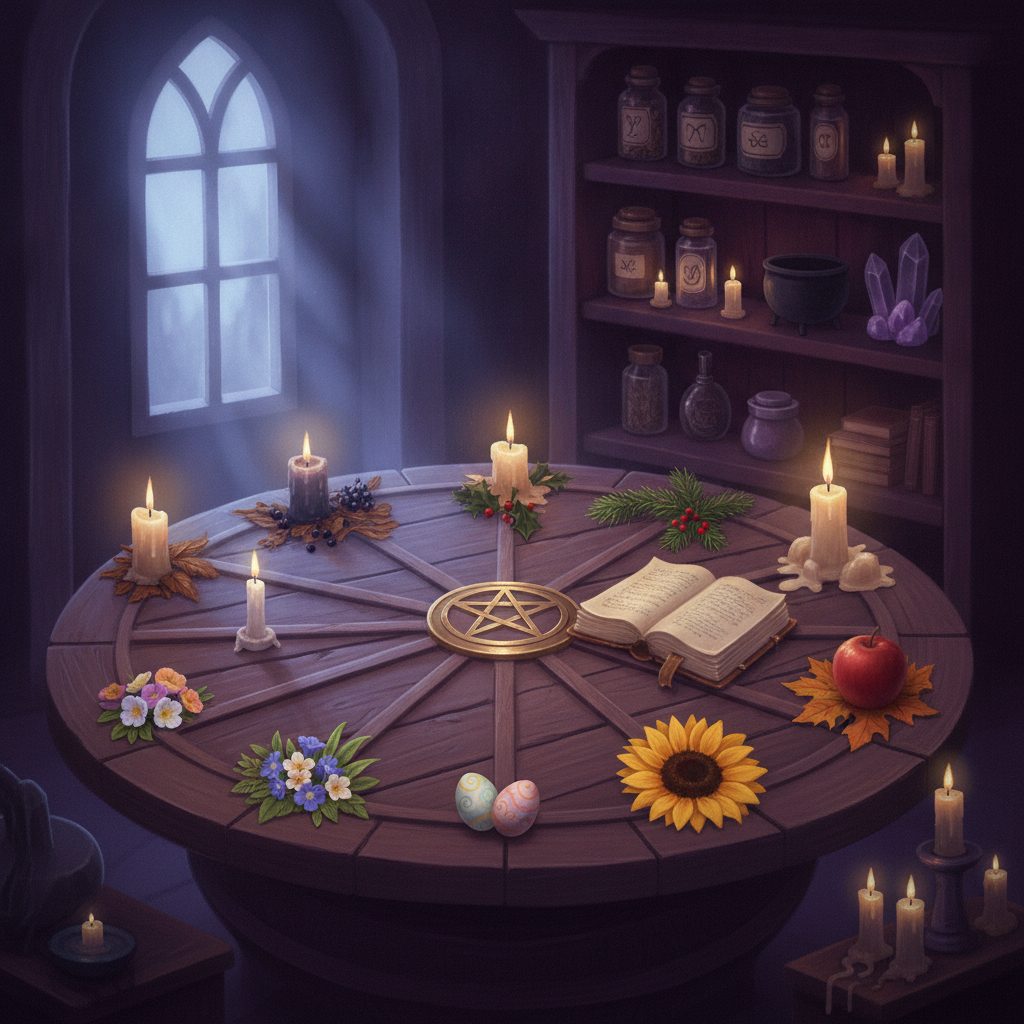
If you have spent any time around Wicca or modern Paganism, you have probably heard of the Wheel of the Year. It is the cycle of eight seasonal festivals, called sabbats, that many practitioners use to mark the turning of the seasons. This guide walks through each one in plain language, so you can see how the wheel fits together and how you might make it part of your own practice.

What Is the Wheel of the Year?

The Wheel of the Year is a modern spiritual calendar. It draws on older seasonal customs from Celtic, Germanic and other European traditions, blended and shaped by 20th-century Wiccan writers. Not every historical culture celebrated all eight festivals, so it is best seen as a living tradition rather than one ancient, unbroken practice.

The wheel is made up of two kinds of festivals:

  • Four solar festivals (the solstices and equinoxes), which follow the sun's position in the sky.
  • Four cross-quarter festivals, which fall roughly halfway between them and are often tied to agricultural life.

Many practitioners also work with a story of the God and Goddess moving through birth, growth, union, decline and rebirth. Others focus simply on nature and the seasons. Both approaches are welcome.

A Note on Dates and Hemispheres

The dates below are for the Northern Hemisphere and are approximate, since solstices and equinoxes shift slightly each year. If you live in the Southern Hemisphere, many practitioners flip the wheel by six months so that the festival matches the season outside their window. For example, Yule would fall in June. Do what feels true to your own land and climate.

The Eight Sabbats Explained

Samhain (around October 31)

Often called the Witches' New Year, Samhain honors endings, the thinning veil and our ancestors. It is a time for remembrance, divination and quiet reflection.

Yule (around December 21)

The winter solstice is the longest night of the year. Yule celebrates the return of the light, with evergreens, candles and gatherings of warmth and rest.

Imbolc (around February 1)

Imbolc marks the first stirrings of spring. Traditionally linked with the goddess Brigid, it is a festival of hearth flames, fresh starts and gentle cleansing.

Ostara (around March 20)

The spring equinox brings balance between light and dark. Eggs, seeds and early flowers are common symbols of growth and new beginnings.

Beltane (around May 1)

Beltane celebrates fertility, passion and the full blossoming of life. Flowers, maypoles and bonfires are classic images of this joyful festival.

Litha (around June 21)

The summer solstice is the sun at its peak. Litha is about abundance, strength and gratitude for the long days, often marked outdoors.

Lammas or Lughnasadh (around August 1)

The first harvest festival honors grain and bread, along with the effort it takes to grow anything worthwhile. Baking and sharing food are popular ways to celebrate.

Mabon (around September 22)

The autumn equinox is a second harvest and a moment of balance before the dark half of the year. Themes include thankfulness, reflection and preparing for the colder months.

Simple Ways to Celebrate the Sabbats

You do not need an elaborate ritual to honor the wheel. Even a small gesture can help you feel connected to the season.

  • Set up a seasonal altar with leaves, flowers, stones or fruit that suit the time of year.
  • Light a candle in a seasonal color and spend a few minutes in quiet reflection.
  • Cook or bake a seasonal meal and share it with people you care about.
  • Take a mindful walk outside and note what is changing around you.
  • Write down your intentions, gratitude or observations for the season.

Safety note: If you use candles, never leave a flame unattended and keep it away from flammable decorations, children and pets. If you work with herbs, incense or essential oils, check for allergies first, and remember that some plants are harmful to pets or during pregnancy. Speak to a qualified professional if you are unsure.

Keeping Track of Your Journey Through the Wheel

Many practitioners find it helpful to record what they do at each sabbat: the weather, the ritual, the dreams, the feelings. Over a few years, those notes become a personal map of your practice. A handmade Book of Shadows can be a lovely home for your seasonal pages, and printable spell pages offer an easy way to build a collection that grows with you.

If you are just getting started, begin with the sabbat that is closest on the calendar. There is no wrong place to step onto the wheel. Think of it as a rhythm you grow into, not a checklist to complete.

Walk the Wheel at Your Own Pace

The Wheel of the Year invites you to slow down and notice the seasons, whether you celebrate all eight festivals or only a few. We would love for you to explore the shop for tools, books and supplies to support your seasonal practice.

Frequently Asked Questions

Do I have to celebrate all eight sabbats?

No. Many people celebrate only the ones that resonate with them, or the ones they have time for. Your practice is personal, and a simple acknowledgment is perfectly valid.

What is the difference between a sabbat and an esbat?

Sabbats are the eight seasonal festivals of the Wheel of the Year. Esbats are gatherings or rituals tied to the moon, most often the full moon.

Is the Wheel of the Year ancient?

The wheel as we know it is a modern arrangement. It draws on older seasonal festivals and folk customs, but the eight-part cycle was shaped in the 20th century.


Follow Rare Wiccan Spells: Facebook • Instagram • Pinterest • YouTube • eBay Store

Scroll to Top